
How to Plan a Hunter Valley Wedding Timeline
(Without rushing, stress, or missing the good stuff)
Planning a wedding timeline in the Hunter Valley is a little different to planning one anywhere else. Vineyards, mountain ranges, long driveways, early sunsets and relaxed venues all play a role — and if the timeline isn’t thought through properly, things can feel rushed very quickly.
The good news? With a bit of planning (and some local insight), your day can flow calmly, naturally, and still leave plenty of time to actually enjoy it.
A quick note on language:
For simplicity and readability, this guide is written using a traditional bride and groom structure. The same timeline principles apply to all couples, regardless of gender or how you identify — simply swap the labels to suit your day.
Here’s how I help couples plan a Hunter Valley wedding timeline that works in real life — not just on paper.
Start With Light, Not the Clock
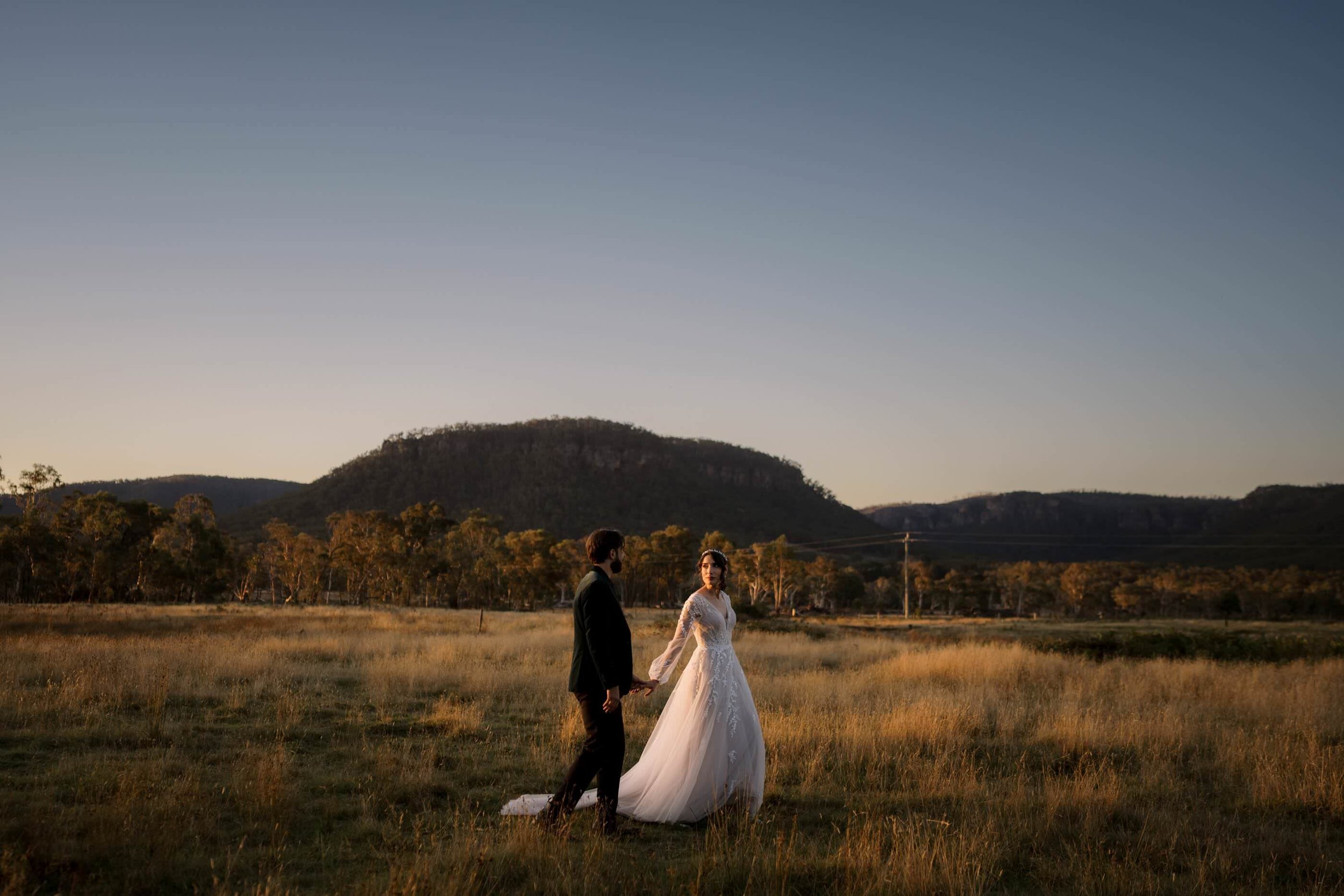
The biggest factor in any Hunter Valley wedding timeline is light.
Because of the surrounding hills and vineyards, the sun often drops earlier than expected — especially in autumn and winter. A “5:00pm sunset” doesn’t always mean usable light until 5:00pm.
This is why timelines should always be built backwards from sunset, not forwards from prep.
As a rough guide:
Summer: Golden light from around 6:30–7:30pm
Autumn: Light starts fading from 4:45–5:30pm
Winter: Golden light can disappear as early as 4:00–4:30pm
Spring: Somewhere in between, depending on venue location
Locking this in early prevents rushed portraits and missed moments — especially at vineyard venues where hills block light earlier than expected.
Ceremony Time Matters More Than You Think
In the Hunter Valley, ceremony time sets the tone for the entire day.
A common mistake is choosing a ceremony time based on guest convenience or venue availability, without considering light or flow.
For most Hunter Valley weddings:
2:30–3:30pm ceremonies work beautifully year-round
Later ceremonies often benefit from a first look
Earlier ceremonies give more flexibility for portraits
Venues like vineyards and estates often prefer later ceremonies — but with the right planning, you can still make it work without sacrificing photos or time with guests.
Start With a Rough Plan
One of the first things I do with couples is sit down early in the planning process to sketch out a draft timeline. Nothing has to be locked in—it’s just a framework that helps you start thinking about the flow of your day.
Key things to consider when creating your wedding timeline:
When to begin prep (hair, makeup, suits)
When to get into your dress or suit
Ceremony start time
How long to allow for family photos
How much time you’ll need for bridal party portraits
Start by choosing your ceremony time—this becomes the anchor for the rest of your schedule. From there, it’s easier to work backwards (prep times) and forwards (photos, reception, golden hour portraits). If it all feels overwhelming, your photographer or planner can help you map this out.
Allow for Extra Time
Wedding days rarely run to the minute. Hair and makeup can run late, traffic can surprise you, or a suit jacket can go missing. Build buffer time into your timeline so the unexpected doesn’t derail the whole day.
A great spot to add extra time is between the end of your ceremony and the start of bridal party portraits. Plan for 30–45 minutes here—enough for family photos, hugs, and breathing room if anything runs behind. That way, your photographer still has time for portraits, and you’ll arrive at the reception on schedule (which makes the caterers very happy).

Getting Ready (Prep) – 1 to 1.5 Hours Per Partner
While grooms often only need 15 minutes to throw on a suit, ties, and shoes, brides typically need more time for hair, makeup, and gowns. Aim for:
Hair & makeup finished 1 hour before you leave for the ceremony
Couples dressed 30 minutes before departure (this allows for portraits with family and the bridal party)
This ensures prep photos aren’t rushed and you can enjoy the build-up without stress.
Travelling to the Ceremony
Always allow for more travel time than you think. Wedding cars like limos or vintage vehicles move slower than standard cars. Add extra time for possible roadworks, detours, or delays. Better to arrive early than feel stressed running late.
Wedding Ceremony – 30 Minutes
Most wedding ceremonies run about half an hour, though religious or cultural traditions can extend this. Work closely with your celebrant—they’ll give you an accurate timeframe.
Pro tip: ask your celebrant to announce an “unplugged ceremony” so guests put away their phones and let the photographer capture everything without a sea of screens.
And here’s a big one—when announcing you as married, ask your celebrant to step aside so they aren’t awkwardly standing behind you during the first kiss. Trust me, no one wants a love triangle in their photos.
Post-Ceremony Hugs – 5–10 Minutes
After walking down the aisle, your guests will rush to congratulate you. These are some of the most emotional and candid wedding photos of the entire day. Allow at least 10 minutes to embrace friends and family before moving into group portraits.
Consider a First Look (Especially in Winter)
First looks aren’t for everyone — but in the Hunter Valley, they can be incredibly practical.
A first look allows you to:
Share a private moment together
Take couple portraits earlier in the day
Complete some (or all) family photos pre-ceremony
Enjoy cocktail hour instead of disappearing for an hour
This is especially helpful for:
Winter weddings
Venues with early light loss
Tight reception schedules
And no — it doesn’t ruin the emotion of the ceremony. If anything, it usually calms the nerves.
Build Buffer Time (The Valley Runs on Its Own Clock)
Hunter Valley weddings are relaxed by nature — and that’s part of their charm. But that also means timelines need buffer space.
Things that often take longer than expected:
Walking guests across large properties
Golf buggy transfers
Family photos (especially with big groups)
Sunset photos when the light is good
I always recommend building 10–15 minute buffers throughout the day. It keeps everything calm and gives you breathing room if something runs late (which it almost always does).
Keep Travel to a Minimum
One of the biggest advantages of Hunter Valley weddings is that many venues offer:
Onsite accommodation
Ceremony + reception in one location
Portrait locations within walking distance
Whenever possible:
Get ready close to (or at) the venue
Avoid unnecessary location hopping
Choose venues that offer variety onsite
Less time in cars = more time enjoying your day (and better photos).
Family Photos: Plan Them, Don’t Wing Them
Family photos don’t need to be stressful — but they do need structure.
Before the wedding:
Create a short, realistic family photo list
Group combinations logically
Nominate a helper who knows everyone
Most family photo sessions can be done in 15–25 minutes if organised properly. Without a plan, they can easily blow out to 45+ minutes and eat into your day.
👉 If you want help with this, I’ve put together a simple guide on how to make family photos quick and stress-free on your wedding day.

A Sample Hunter Valley Wedding Timeline
(Example only — adapt as needed)
Here’s a rough example for a 3:00pm ceremony with no first look:
12:00 PM – Groom prep
12:10 PM – Groom suits up
12:50 PM – Photographer heads to bride prep
1:00 PM – Bride prep
1:15 PM – Hair & makeup finished
1:30 PM – Bride gets in her dress
2:15 PM – Photographer heads to ceremony
2:30 PM – Photographer arrives onsite
3:00 PM – Ceremony
3:30 PM – Ceremony finished - Congratulations + family photos
FREE Guide to quick stress free family photos on your wedding day!
4:00 PM – Drinks & time with guests
4:30 PM – Wedding party photos - Bride & Groom + Their Crew
5:30 PM – Guests seated in reception
6:00 PM – Reception entrance
6:30 PM – Dinner
Sunset will usually fall after mains during daylight saving, or mid-portraits during non-daylight saving.
This will vary depending on season, venue and whether you choose a first look — but it’s a solid starting point.
The Photographer’s Role in Your Timeline
Your photographer doesn’t run your wedding — but they play a huge role in shaping the timeline.
We know:
How long moments actually take
When the light is best
How to keep things moving without rushing
When to step in and when to step back
If you don’t have a planner or coordinator, your photographer, celebrant and venue will often work together behind the scenes to keep the day flowing smoothly.
Final Thoughts
A great Hunter Valley wedding timeline isn’t about squeezing everything in — it’s about creating space.
Space to breathe.
Space to enjoy your people.
Space to let moments unfold naturally.
When the timeline works, the day feels calm, connected and genuinely fun — and the photos reflect that. You’re not rushing from one thing to the next, you’re actually present in the moments you’ll remember most.
If you’re planning a Hunter Valley wedding and want help building a timeline that genuinely suits your venue, season and priorities, this is something I guide all my couples through as part of the process.
You can read more about how I work (and what’s included) over on my wedding photography pricing & packages page.
And if family photos are one of the parts of the day you’re most worried about, I highly recommend reading my guide on how to make family photos quick and stress-free on your wedding day— it pairs perfectly with a well-planned timeline.
Hunter Valley Wedding Venues Featured on the Blog
Every Hunter Valley venue has its own rhythm, layout and light challenges — which is why timelines are never one-size-fits-all. If you’re planning your wedding at one of the venues below, you’ll find real wedding examples, lighting notes and flow tips inside each gallery.
→ Ben Ean Winery — relaxed vineyard weddings with multiple ceremony options
→ Circa 1876 / The Convent — intimate heritage charm with beautiful winter light
→ Margan Wines — garden ceremonies, mountain backdrops and early light considerations
→ Talits Estate — all-in-one venue flow with golden-hour vineyard portraits
→ Moravia Park — rustic barn weddings with wide-open portrait locations
→ Riverwood Downs — Upper Hunter weddings where timelines revolve around landscape and travel
→ Emma's Cottage Vineyard — intimate Lovedale venue with seamless ceremony-to-reception flow
→ Chateau Elan — versatile spaces and weather-proof planning options
Need Help Planning Your Hunter Valley Wedding Timeline?
Timeline planning is included with every wedding I photograph — along with venue-specific advice based on 12+ years shooting across the Hunter Valley.
